Talent acquisition strategy: Framework, best practices, and examples</h1>


A talent acquisition strategy is a plan for attracting and selecting people who can meet the organization’s current and future workforce needs. While “acquisition” points to bringing people in, filling a vacancy only helps the business if the new hire can succeed in the role.
SHRM research found that more than three in four organizations had struggled to recruit full-time employees, and nearly half had struggled to retain them.* With both challenges demanding HR’s attention, it makes little sense to limit acquisition to how someone joins without considering what will retain them.
The hiring process already establishes the capability a role requires and the outcome the company expects. Those decisions should guide the new hire’s first months, rather than leave their manager to build an onboarding plan from scratch. Talent acquisition doesn’t need to own onboarding or development, but the strategy should give the people who do a clear starting point.
This guide explains how to build that connection into a talent acquisition strategy, with practical examples of how hiring decisions can shape onboarding and early goals.
* SHRM, 2024
What a talent acquisition strategy and process includes
"Being in HR doesn't mean you're not part of the business. The shift is realizing that every tactic, hiring, L&D, benefits, must align to business strategy and outcomes."
— Luck Dookchitra, VP People & Culture, Leapsome
Talent acquisition planning and strategy define how the organization will find and select the people it needs to achieve its business goals. It gives hiring teams a shared operating model for decisions, so each vacancy triggers the same chain of events.
To do that, the strategy needs four connected building blocks:
- Business need and workforce planning priorities: Define what problem the hire should solve and why it takes priority. For instance, a team struggling to serve existing customers needs a different role from one preparing to enter a new market, even if both managers request more headcount.
- Talent market and employer branding: Identify who could meet that need and what would make an employer value proposition worth considering. For example, in a global talent acquisition strategy, you’d adapt your offer to candidate expectations in each market rather than assume the same benefits appeal to everyone.
- Selection criteria and decision process: Standardize what proof applicants need to provide and who makes the final call. Use the role’s required competencies to guide assessment, so interviewers evaluate the same requirements instead of comparing personal impressions.
- Success measures and onboarding handoff: Define which outcomes you expect from new hires in the first six months and what the manager needs to carry into onboarding. Document the reasoning behind hiring decisions in a centralized HRIS like Leapsome, so the manager can build on the employee's strengths and plan support where skill gaps exist.
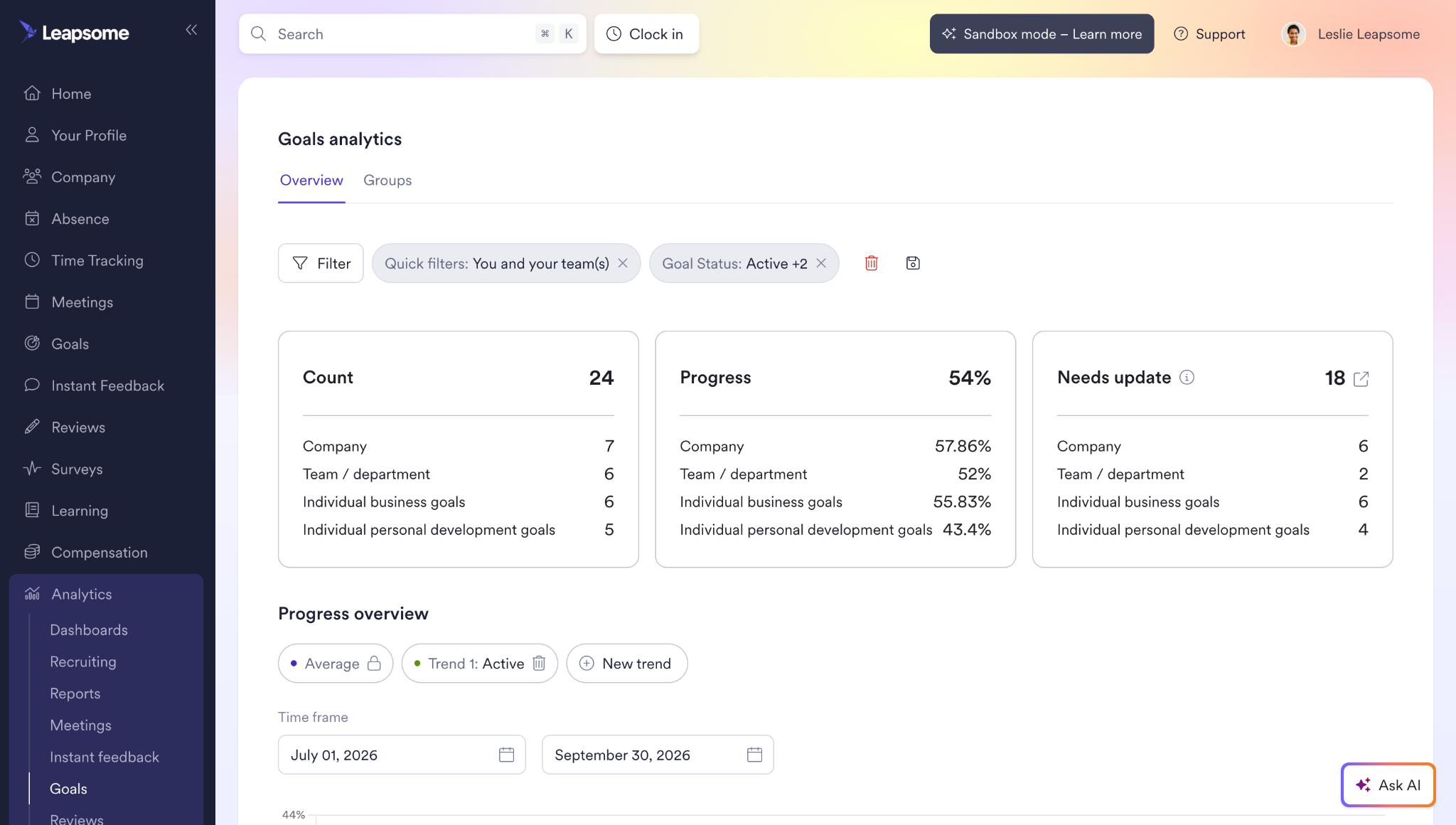
🔭 Turn hiring expectations into clear goals
Leapsome Goals and OKRs help turn the success measures defined during hiring into goals for the employee’s first months, giving HR and managers shared visibility into progress.
👉 Explore Goals and OKRs
Design the hiring-to-onboarding handoff from the start
"Competency frameworks are not just checklists. They're roadmaps for growth and accountability. They help managers coach more effectively and give employees a clear picture of how to succeed at every level."— Monica Sarkar, Co-Founder, Purple Umbrella
Hiring teams spend time agreeing on what a role requires, then leave the onboarding manager to translate those requirements into an employment plan. Instead of ending the acquisition process with an offer letter, a better hiring process should carry strategic thinking forward, so the employee’s first months reflect the reasons why the company hired them.
Here’s how planning the handoff improves what the manager and new hire have to work with:
This hiring-to-onboarding workflow doesn’t add another approval stage. It asks HR and the hiring manager to turn the outcomes they expect into a starting plan while that thinking is fresh. The employee should help refine it, particularly where hands-on experience reveals needs that interviews couldn’t.
For example, a company hiring a customer success manager needs someone who can recognize account risks and handle difficult customer conversations. Interviewers assess those competencies through an account scenario. Before the employee starts, the team lead drafts a ninety-day outcome of independently managing a small customer portfolio. Onboarding then includes shadowing account reviews and practicing escalation conversations, with the lead and employee agreeing on goals and development support as they assess progress.
Put your talent acquisition strategy into practice
"The purpose of an HR function is to create a people strategy that most effectively drives business goals. It starts with the business, then you build your people strategy from there."
— Melanie Naranjo, Chief People Officer, Ethena
In SHRM’s report, recruiting ranked as HR’s top priority, but only 56% of HR professionals rated their organization’s recruiting efforts as effective or very effective.
Instead of just calling recruiting a priority, HR teams should invest time and resources into building a strong, reliable process. Here are a few practical steps you can rely on.
Build talent pipelines around likely workforce needs
Meet with business leaders to understand how their plans will change staffing needs. If the company, for example, expects to onboard more customers next quarter, work with the implementation manager to assess the team’s capacity and identify the expertise additional hires would need.
Once that need is clear, recruiters can contact suitable candidates before the hiring request arrives. Explain the likely opportunity and timing, then agree on when to reconnect as plans become more realistic. This gives recruiters a shortlist of interested people to approach when the role opens.
At the same time, ask managers if current employees could move into those roles with proper skill development. Identifying that potential early gives everyone time to prepare.
Give each selection stage a clear purpose
"If the people you hire aren't aligned, you'll constantly play catch-up. Use tough interview questions to test alignment and maturity early."
— Melanie Naranjo, Chief People Officer, Ethena
An extra interview session can feel reassuring to a hiring manager without affecting or improving the final decision. That’s why, before adding a stage, you should specify what evidence it will collect and how that information will help assess the role’s requirements.
Tell candidates how many stages to expect and when they’ll hear back after each one. Set a deadline for interview feedback and schedule the hiring manager’s decision before the promised update. The recruiter should chase missing assessments ahead of that discussion, then tell candidates the outcome or explain any delay.
Use data to spot the problem before changing the process
Use data from your applicant tracking system to spot where candidates drop out or decisions stall, then investigate the cause before making changes.
For example, if qualified candidates regularly withdraw after the first interview, review that stage before spending more on careers pages. Ask departing candidates for feedback and check how long they waited for an update. If slow responses contributed to their decision to leave, tighten feedback deadlines rather than remove an interview panel that provides useful evidence.
Go deeper with that analysis after the hire. A connected platform like Leapsome gives HR access to hiring evidence and subsequent performance data, helping teams investigate gaps between interview assessments and job outcomes. When a new employee struggles with a competency the interviews assessed, review that evidence alongside onboarding support they received before deciding what to change.
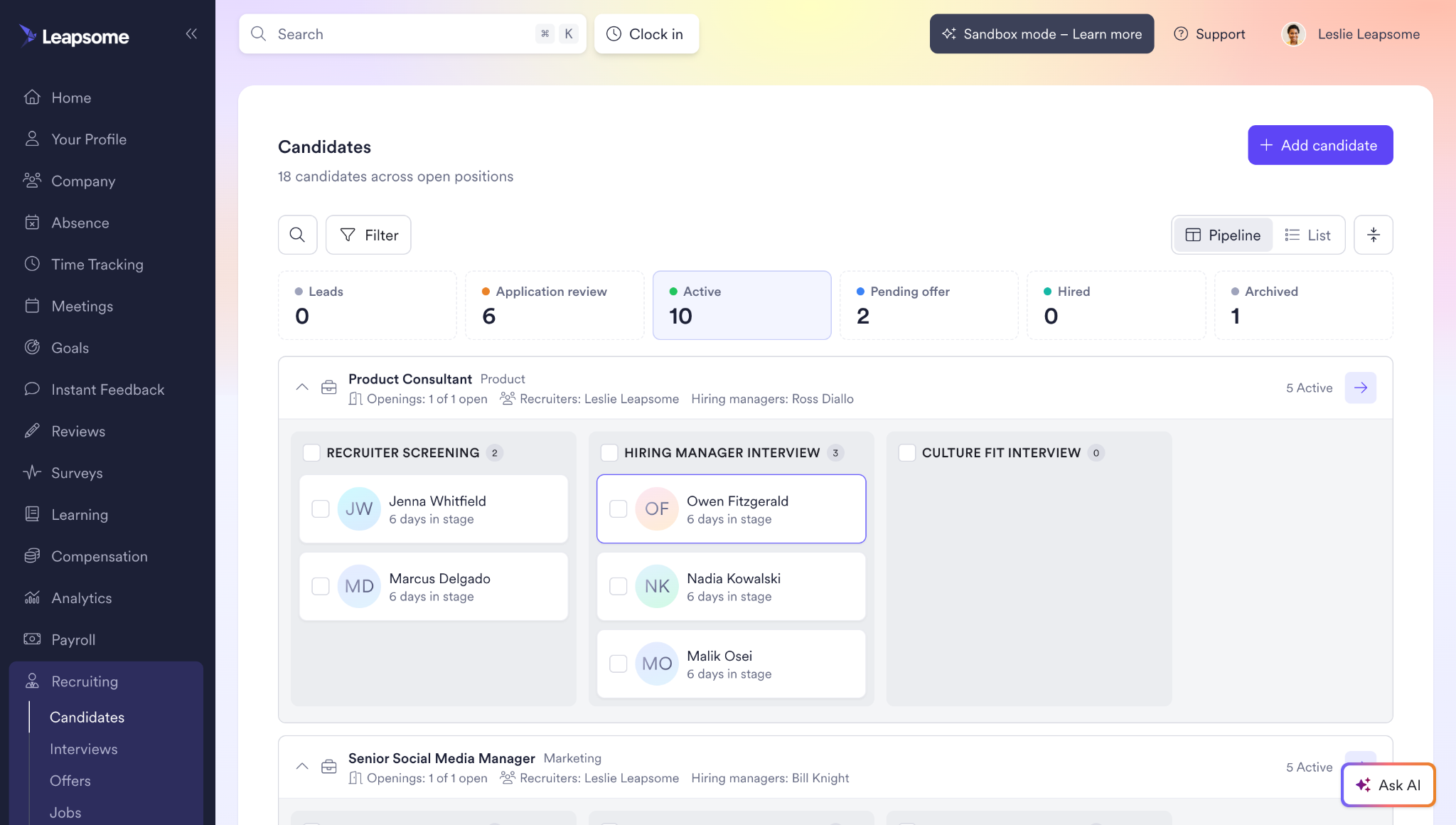
🧭 Use employee outcomes to guide future hiring
Leapsome Recruitment uses the same competencies as Performance Reviews and connects candidate data with onboarding, helping HR assess how hiring decisions translate into employee performance.
👉 Explore Recruitment
Build a talent acquisition strategy that carries through the employee lifecycle with Leapsome
When hiring decisions stay in disconnected recruiting tools, teams have to piece together why the company chose each new hire before managers can plan what comes next. The employee starts with a job description, but the evidence that should guide their onboarding and development sits elsewhere.
Leapsome brings that context into one connected platform, helping HR and managers build on the hiring decision throughout the employee lifecycle with:
- Recruiting and Onboarding: Candidate data becomes part of the employee record, and preboarding begins when the candidate becomes a hire.
- Competency Framework: Structured interviews and Performance Reviews use the same competencies, giving managers consistent expectations to assess and develop people.
- Goals and OKRs: Managers can turn the outcomes defined during hiring into individual goals. This lets them track progress from the employee’s first months throughout their lifecycle at the company.
- Performance Reviews: Managers can evaluate progress against those goals and competencies, then use the findings to shape future development plans.
"There is no more fighting with the review process for managers, and the administrative work for HR is reduced by about 90%."— Amanda Heeg, Senior HR Manager, Junique
🗺️ Plan for success beyond the offer acceptanc
Leapsome helps HR and managers turn hiring expectations into onboarding priorities and development goals, with visibility into progress after the employee joins.
👉 Request a demo
FAQ
What are some strategies for talent acquisition?
Talent sourcing strategies include building candidate pipelines, maintaining active profiles on job boards, and developing existing employees. Employee referral programs can also help employers proactively track key candidates through trusted networks.