Employee onboarding: Process, best practices, and tips for success


Many HR professionals know that good onboarding is crucial to long-term employee success but don’t have a full picture of what it should entail beyond orientation, paperwork, and a few days of training. They may also feel a lack of support from leadership to improve their current processes.
Indeed, when we asked people to rate their company’s employee onboarding processes, only 45% described them as good. 28% said they were okay, and 26% felt they were bad, which suggests that many businesses still have work to do in this area.*
What are these organizations missing? The reality is that an effective onboarding process is about prioritizing employee needs, which takes time and collaboration and requires you to empathize with new hires.
In this article, we explore what a successful onboarding experience looks like, why it matters, and what you can do to make it more effective.
*Leapsome’s State of Employee Enablement Report, 2023
🧑🍳 Onboarding that caters to individual employees
Leapsome’s Learning module lets you design onboarding and training programs based on specific employee needs and skill sets.
👉 Learn more
What’s onboarding?
Onboarding is the process companies use to introduce new employees to their policies, processes, and culture. It’s about acclimatizing recent hires to their teams and introducing them to their new roles as part of an incremental process which can take anywhere from three months to a year, depending on the person and the job.
The ultimate goal of onboarding is to set employees up for success. Many organizations stop the process immediately after orientation — the initial few days are dedicated to completing administrative tasks and setting new hires up with the requisite equipment and tech stack. However, ideally, you should think of the employee onboarding experience as a more holistic and purposeful longer-term process aimed at achieving specific goals and successfully integrating a new team member fully.
Benefits of effective employee onboarding
According to an O.C. Tanner report, 43% of employees said their onboarding process only consisted of a one-day orientation and information on their benefits package. That means large swathes of new hires miss out on the training, coaching, and peer-to-peer mentorship they need to adapt to their new roles and working environment.
Considering that, let’s look at some of the key benefits effective onboarding offers teams:
- Higher engagement and satisfaction rates: When team members feel welcomed and supported early on, they’re 1.8 times more likely to feel more connected with their work. They’re also more likely to report high satisfaction on an engagement survey.
- Shorter ramp-up time: It takes around eight to 12 months for employees to be fully productive. However, as a study from Microsoft uncovered, an effective onboarding with more managerial and peer involvement can shorten time to productivity depending on how many times new hires meet with their managers and assigned “buddies.”
- Better long-term performance: When managers are empowered to provide good coaching and mentoring, it positively impacts how new employees perform. This often leads to an increase in evaluation scores and success with goals and OKRs.
- Improved retention: Research from the Brandon Hall Group found that strong onboarding improves retention by 82%, suggesting how central a well-designed onboarding process is to making your organization more resilient.
How long does the onboarding process take?
While many organizations set up their onboarding flow to last three to six months, HR and recruiting experts say an effective process should last around one year. This allows employees to get fully comfortable with the skills and responsibilities required for the new role before they focus on long-term development. A longer time frame also prevents the issue of information overload. A year-long period also gives new team members time to see the company values at work and build strong relationships with their manager and coworkers, which can sometimes be challenging or take a little longer if they’re in a remote role.
HR leaders and managers may be tempted to onboard new staff members quickly in order to get them up and running as soon as possible. However, a Gallup report revealed that only 29% of professionals feel ready to succeed in their roles after onboarding, indicating that a faster process isn’t necessarily better.
Ultimately, excellent onboarding experiences prioritize employee needs. Some team members might prefer shorter, more structured processes, while others may need a complete year to perform at their full potential, particularly if they’re in a senior or specialized role. That’s why HR professionals should rely on internal data, goal tracking, and bespoke onboarding courses to design a process that truly empowers new hires.

🛣️ Start new team members on their goal-setting journeys
Use Leapsome to teach new hires company best practices, offer guidance, and help them realize their onboarding goals.
👉 Learn more
Key steps and timeline of the employee onboarding process
Onboarding new hires is a living process that you’ll refine over time as the needs of your organization change and evolve. Still, there are universal elements you shouldn’t neglect if you want to make a great first impression:
- Use employee enablement software to make the whole process easier: When optimizing the first onboarding process steps, start by integrating employee enablement software like Leapsome into your stack. Many companies rely on a dispersed set of tools to handle onboarding. They may use a learning management system (LMS), an engagement solution, and OKR software to manage all the aspects of training and integrating new team members. In addition to being more expensive, scattered tools make it harder for new hires to follow a smooth workflow. Instead, holistic people enablement platforms like Leapsome provide an integrated suite of goal-setting, learning, and engagement features to create a seamless experience for managers and employees alike.
- Give a warm welcome: They’ve got the job, but new hires are still likely to feel like outsiders until they get acquainted and start fulfilling key aspects of their role. The first day, when they’re introduced to the team, is the perfect opportunity for leaders to speak up. They should reaffirm how glad they are to have the new team member with the organization because of their strengths, skills, and experience.
- Emphasize values early on: Within the first week, initiate conversations about how company values translate to daily work. David Ciccarelli, CEO at Voices, had this to say about discussing values during onboarding: “We spark conversation by asking, ‘What evidence would you need to see to believe these values are our true values?’ As a leader, I tend to let this discussion go as long as it needs to and ask participants to talk about how they expect to see our values at work. Encouraging this kind of conversation during employee onboarding sets the right tone for a great working relationship, which is especially important for remote work.”
- Address career development: Around the six-month mark of onboarding, managers should initiate a conversation about professional development. You can make use of competency frameworks to discuss what skills team members need to excel in to be well-positioned to move into a more senior role. Also, discuss opportunities for other kinds of advancements like horizontal promotions or lateral transfers.
⭐ Looking for an in-depth roadmap to update your onboarding process? We discuss best practices, key questions, and timelines in our expert guide to creating an effective onboarding process flow.
How to get the whole team involved in onboarding
The widespread adoption of remote work has made team engagement more challenging during the onboarding process. Companies need to come up with creative ways to make recent hires feel included and part of their new professional community. Check out the ideas below to get started, which work equally well for remote, hybrid, and in-office teams.
1. Share new employees’ stories
Encourage new team members to share information about their professional experiences, career backgrounds, and personal interests to build connections with their colleagues. Perhaps ask them to write short biographies about themselves to share in your company newsletter or team Slack channel. You might also ask them to prepare some fun questions for their coworkers to answer via the company intranet, which could be an especially fun activity for remote teams.
Prompt them to talk about:
- Hobbies and interests outside of work
- How they approach collaboration and teamwork
- Social issues or causes they’re passionate about
- Preferred communication channels or methods
- Personal goals and aspirations outside of work
2. Pair new hires with “buddies”
A successful way to make employees feel more comfortable is to match them with an informal mentor (or “buddy”) within the company. This person should be different from their manager and can reach out to them before their first day of work to establish themselves as a go-to resource.”
When Microsoft took the time to research the effect of the buddy system on employee onboarding, they found that 56% of new hires who met with their onboarding buddy at least once in their first three months said this colleague helped them to ramp up more quickly. If you want to give your “buddies” or mentors this level of responsibility, make sure they have the resources they need to be effective. More specifically:
- Provide them with mentorship training sessions
- Offer ongoing support, feedback, and coaching
- Create a dedicated bank of resources and tools that peer mentors can refer to at any time to refresh their knowledge of policies, processes, and values
3. Get varied input on learning and training
Leaving the onboarding process to your human resources and learning and development teams means missing out on broader expertise and perspectives. They may not have insight into the day-to-day operations and nuanced processes other departments follow. Significant cross-functional stakeholder input is required to design training courses that cater to different roles and levels of seniority.
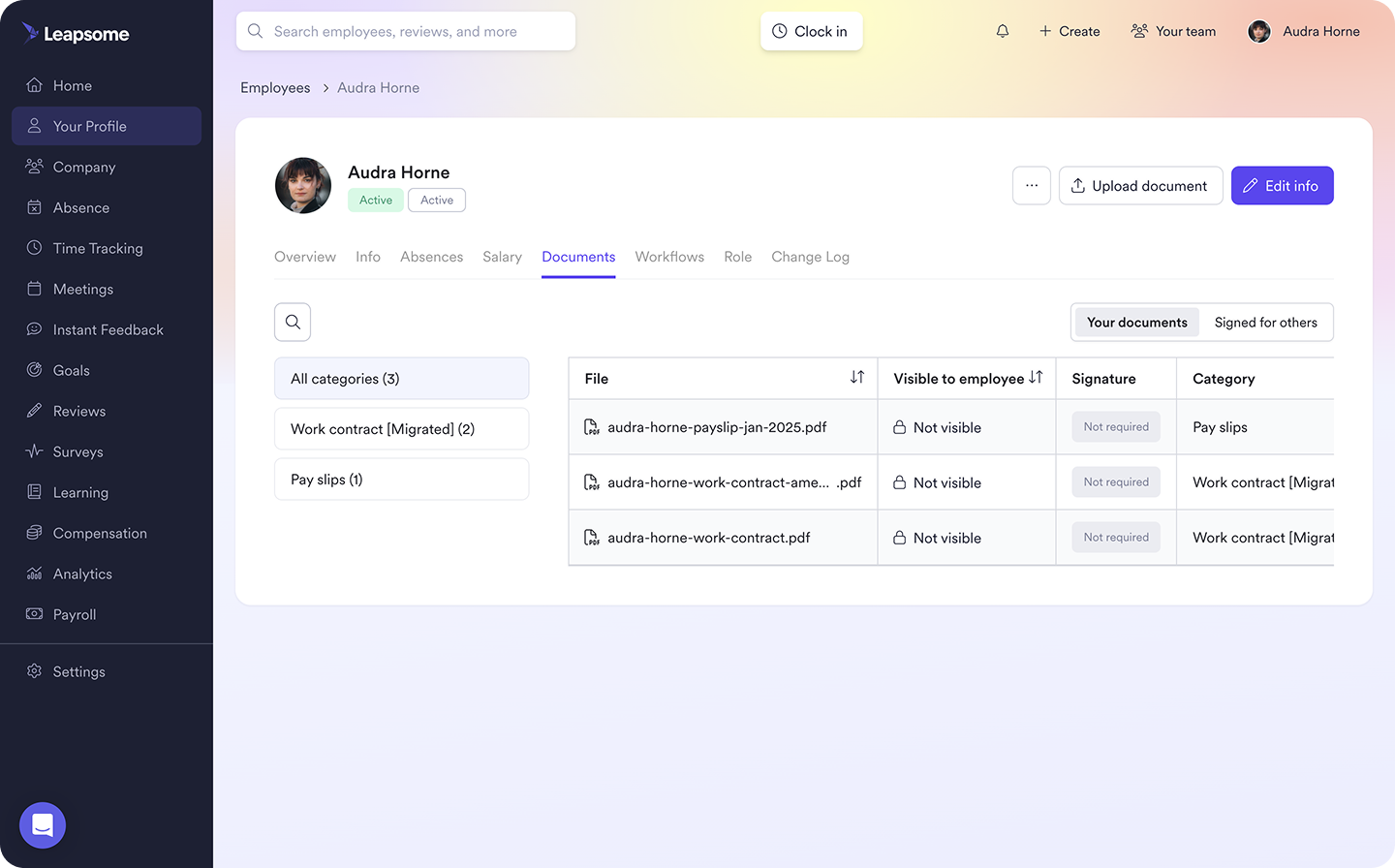
Strategic HR leaders build momentum for the onboarding process long before a new hire’s first day begins. You can use Leapsome to make the journey from candidate to contributor easy through structured workflows that start the moment an employee signs a contract.
Leapsome’s Pre-boarding and Onboarding workflows automate the busywork of document signatures and task assignments, so your People team can focus on the human side of the experience. Because these workflows integrate with tools like learning modules and employee records, you can be sure that every employee enters your organization with the role-specific tailored support they need to succeed.
🎨Design impactful onboarding experiences
Leapsome’s Pre-boarding and Onboarding features help teams share welcome messages and grant access to role-specific information to drive early engagement and improve efficiency.
👉 Explore Pre-boarding and Onboarding
Tailoring your onboarding program to different roles
Customizing the onboarding process to distinct roles within your company helps keep new hires from feeling overwhelmed. It means people don’t feel like they have been left to figure out what specific processes or workflows to follow for themselves because you’ve laid the groundwork for them. It also reduces the ramp-up time for new hires becoming productive, allowing new employees to start contributing to their teams with greater confidence sooner.
Below, we will walk you through techniques to make the onboarding experience smoother for various types of employees within your organization.
Management & leadership
Team members in more senior roles need a solid grasp of your overarching mission, strategic vision, and long-term goals so they can lead their direct reports in carrying out company objectives and initiatives. They should also understand your organization’s reporting structure and how best to coordinate with key stakeholders.
As people leaders, managers also need ongoing leadership training to make them more effective coaches and communicators.
With 43% of team leaders reporting burnout, companies that want to create a better onboarding experience should reflect on these questions:
- How can we support managers in building relationships?
- How can we help managers navigate team dynamics?
- What kinds of development opportunities can we offer managers?
- What can we do to align our company’s strategic goals with managerial needs?
- How can we gather objective feedback on manager performance?
Remote workers
Without an in-person mentor or team leader to guide them through orientation and the early phases of onboarding, remote employees may feel that they have to figure everything out on their own. With that in mind, preboarding is vital for remote team members so they have their technical setup in order and feel clear and confident about their first day.
During the first week, you’ll also want to make remote new hires aware of:
- Remote-specific policies, procedures, and security protocols
- How you’ll conduct training sessions and meetings
- Expectations for communication and productivity
- The best ways to contact their managers, colleagues, and teammates
- How they can access technical support
- Your company’s system for continuous feedback
Employees returning to work after an extended absence
Companies may rely on a process called reboarding or re-onboarding to reintegrate a team member after an extended absence. Whether the individual was away on medical leave, parental leave, or sabbatical, reboarding ensures they experience a smooth transition back into the role. Specific measures may include:
- A catch-up meeting or welcome-back session that allows them to get up to speed on current team goals, priorities, and projects.
- Refresher training to help them recall your procedures, policies, and processes and give you the opportunity to cover any recent updates.
- A flexible onboarding schedule that’s not as regimented as it may be for new hires.
⭐ Reboarding isn’t just for employees that have been away from work. You can also “reboard” current long-term team members to bolster your retention efforts. Introducing potentially forgotten aspects of your processes and culture can also reinvigorate staff experiencing disengagement at work.
Employees with special circumstances
People-centric organizations prioritize inclusion and consider team members that have unique circumstances during onboarding. Whether they’re welcoming new hires with disabilities or employees that are long-term caregivers, companies need to be adaptable, flexible, and creative to make their workplace psychologically safe for everyone.
Top onboarding priorities for employees with special circumstances include:
- Accessibility: Will the new hire need any specific accommodations, technology, or materials to make their professional life more comfortable?
- Sensitivity: How can we prepare our current teams to foster an inclusive environment and create a culture of respect and empathy?
- Confidentiality and privacy: What policies or processes should we put in place to ensure team members respect every individual’s privacy and confidentiality?
- Support and community: What appropriate networks and resources can we provide for our new hire to ensure their success?
How to measure onboarding impact
Your onboarding practices can reveal measurable data about your company's health and growth potential. Measuring the impact of onboarding programs helps you identify where new hires feel supported and where your system might need refinement.
Here are a few metrics to keep an eye on:
- New employee engagement: Many organizations use engagement surveys to measure how well new employees connect with company culture over their first few months. This metric provides early signals about whether your mission and values resonate with your newest talent, which can help you estimate employee retention and course-correct as necessary.
- 90-day retention: To evaluate your onboarding process’s impacts on organizational health, calculate how many employees stay past the three-month mark. A retention rate of 90% or more at 90 days suggests that your team sets realistic expectations and provides the support necessary for long-term success.
- Workflow efficiency: Measure how much time it takes to onboard, and estimate how many hours of manual labor your team eliminates through automations (or could ramp up to save). For example, the team at BEAT81 used this data to prove workflow efficiency value after saving more than 10 hours on monthly onboarding tasks with Leapsome.
- Time-to-productivity: “Soft costs,” like manager time and workflow disruption, significantly add to the average cost per hire. This means you need to monitor how quickly new employees pick up their responsibilities and begin contributing to team objectives. Reducing this ramp-up period directly increases the return on investment in your talent management strategy while supporting existing teams.
How to onboard a new remote employee
Intentionality is key for remote onboarding processes. Digital distance can hide the subtle visual cues that managers normally use in office settings to evaluate employee well-being. Those cues affect new hires in remote teams, too: They’re more likely to feel like they can’t ask quick questions because they lack the visual cues that suggest their manager is available for a conversation.
A 2025 research study found that employees who work remotely more than three days per week are significantly more likely to report feeling lonely. To prevent early disengagement that comes from isolation, use these tips to create more opportunities for engagement:
- Ship hardware and login credentials well before the start date: Early delivery means your hires have all their training materials immediately upon logging in for the first time. This prevents the frustration of sitting idle while waiting for IT to grant access to important tools.
- Host all training materials and company policies in one accessible location: Centralized self-service resources empower remote employees to find answers independently. This helps them feel more competent when they need to look up a basic process, then get back to the rest of their day faster.
- Use Q&A boards: Give new hires a dedicated space to ask questions. Employees can post inquiries and receive answers on Q&A boards that the entire team can see. This creates a living knowledge base and reduces the repetitive effort of answering the same questions during every new hire’s first weeks.
- Run automated onboarding surveys: According to Gallup, only 12% of employees think the onboarding process is good in their current company. To boost those satisfaction scores and find potential roadblocks, prompt your new hires to complete onboarding surveys. Consider using them at the two-week and 90-day marks to identify friction points in your onboarding process before problems boil over.
Keep track of onboarding progress with Leapsome
An excellent onboarding program needs ongoing refinement, and a core responsibility for human resource teams is to continuously monitor its success. Besides time-to-productivity, engagement rates, and performance scores, people ops professionals and HR managers can also track:
- New hire turnover rates
- Employee and new hire retention threshold
- Onboarding satisfaction scores
- 360-degree feedback
- Training completion rates
With Leapsome, you can monitor your onboarding and engagement analytics with the same platform you use to facilitate employee learning, engagement, and performance. Use our Learning module to design onboarding courses, offer asynchronous coaching and feedback, and set goals that drive performance. Then, simply navigate to the platform’s analytics dashboards to see where you can improve your current processes.
Best of all, Leapsome is intentionally designed to optimize collaboration between departments and stakeholders, which is key to making work more engaging and empowering for everyone.
🚣 Onboarding workflows that are designed for everyone to navigate
Leapsome is intuitively simple to use, so managers and new hires can work together better.
👉 Book a demo
FAQ
What do employee onboarding procedures involve?
Onboarding is a structured process that integrates new hires into an organization. It acts as a bridge between the initial hiring process and the role’s daily realities. Typically, HR teams start this process after an offer is accepted, and it continues through paperwork, training, and cultural assimilation until the employee reaches full productivity.
What are the best practices for onboarding new employees?
Many high-performing HR teams prioritize a robust pre-boarding phase to handle administrative tasks before the first day on the job begins. These teams sometimes extend the onboarding period for up to one year to ensure long-term performance and engagement. To support this long-term endeavor, using Leapsome’s combined HRIS and talent management platform keeps the entire employee lifecycle measurable and transparent.
Leapsome Team