Gehaltskompression: Ursachen und wie ihr sie verhindert


Haftungsausschluss: Diese Inhalte dienen ausschließlich allgemeinen Informationszwecken und stellen keine Rechtsberatung dar. Leapsome übernimmt keine Gewähr für die Rechtskonformität und kann nicht bestätigen, wie einzelne Sachverhalte vor Gericht bewertet würden. Wenn ihr unsicher seid, wie die Vorgaben auf euer Unternehmen zutreffen, wendet euch an eine qualifizierte Rechtsberatung.
Die Gehaltsverteilung auf dem US-Arbeitsmarkt hat sich seit 2020 verdichtet, und ein Ende ist nicht in Sicht.* Gering bezahlte Mitarbeitende erlebten schneller steigende Löhne als Mitarbeitende in höheren Gehaltsstufen.
Gehaltskompression auf gesamtwirtschaftlicher Ebene ist nicht zwangsläufig etwas Schlechtes, besonders wenn sie Menschen aus der Armut holt. Auf Unternehmensebene kann sie jedoch ernsthafte Probleme verursachen. In solchen Fällen erhöhen einzelne Unternehmen die Einstiegsgehälter, um im Wettbewerb um Talente zu bestehen, ohne die Vergütung erfahrener und qualifizierter Teammitglieder entsprechend anzupassen.
Viele HR-Teams konzentrieren sich darauf, die Gehälter langjähriger Mitarbeitender anzupassen, um die Lücke zu schließen. Doch Gehaltskompression ist oft nur das Symptom eines tieferliegenden, systemischen Problems: Vergütungsentscheidungen, die nicht mit Erfahrung, Kompetenzentwicklung oder Leistung verknüpft sind.
Dieser Leitfaden zeigt, wie Gehaltskompression entsteht und wie HR-Verantwortliche sie verhindern können, indem sie die fragmentierten People-Systeme an der Wurzel verbessern.
* Arindrajit Dube, Provost Professor für Volkswirtschaftslehre an der University of Massachusetts Amherst
Was ist Gehaltskompression?
Gehaltskompression, auch Lohn- oder Salary Compression genannt, tritt auf, wenn Mitarbeitende mit langer Betriebszugehörigkeit, gefragten Fachkenntnissen oder hoher Verantwortung ähnlich viel verdienen wie die ihnen direkt unterstellten Mitarbeitenden oder neue Kolleginnen und Kollegen.
Stellt euch vor, euer produktivster Software-Engineer arbeitet seit über zehn Jahren in eurem Unternehmen. Trotz durchweg starker Leistungsbeurteilungen und stetig wachsender Fachkenntnisse hat diese Person jedes Jahr nur eure reguläre Gehaltserhöhung erhalten, dazu einen bescheidenen Leistungsbonus und gelegentlich andere Formen der zusätzlichen Vergütung. In einem Jahr steigen die Marktgehälter für Engineers sprunghaft an, und neu eingestellte Mitarbeitende verdienen plötzlich fast genauso viel wie euer Top-Talent. Diese Person ist jetzt von Gehaltskompression betroffen.
Auch wenn die Begriffe ähnlich klingen: Gehaltskompression ist nicht dasselbe wie Gehaltsungleichheit. Gehaltsungleichheit entsteht, wenn Mitarbeitende aufgrund geschützter Merkmale, die nichts mit ihrer Leistung zu tun haben, wie Alter oder Geschlecht, unterschiedlich bezahlt werden.
Was sind die Hauptursachen für Gehaltskompression?
„Sobald ihr den Marktvergleich kennt, liegt die eigentliche Herausforderung darin, ihn mit eurer internen Realität abzugleichen. Wer liegt über oder unter der Bandbreite, und warum? Lässt sich das objektiv begründen?“
Alexandra Edl, Senior HR Consultant, Interim Manager, Coach, and Trainer, EDL Consulting
Gehaltskompression entsteht meist durch eine Kombination interner und externer Faktoren, zum Beispiel:
- Steigende Markteinstiegsgehälter: Wenn ein angespannter Talentmarkt die Einstiegsgehälter in die Höhe treibt, geraten Unternehmen unter Druck, ihre Angebote zu erhöhen, um mehr Talente zu gewinnen. Gehaltskompression entsteht, wenn sie die Gehälter langjähriger Mitarbeitender nicht entsprechend anpassen.
- Begrenzter Spielraum bei Gehaltserhöhungen: In einem Arbeitsmarkt, in dem die Nachfrage die jährlichen Budgets für Gehaltserhöhungen übersteigt, erhalten Top-Performer oft nur bescheidene Erhöhungen, die nicht mit den steigenden Einstiegsgehältern mithalten. Laut Payscale liegen die Gehaltserhöhungen 2026 im Schnitt bei 3,5 %, und fast jede fünfte Organisation hat keinen Prozess für leistungsbezogene Erhöhungen. So gerät die Vergütung leicht aus dem Gleichgewicht.
- Erhöhungen des Mindestlohns: In Unternehmen, in denen die meisten Mitarbeitenden stundenweise bezahlt werden (etwa im Einzelhandel oder in der Dienstleistungsbranche), kann eine Erhöhung des Mindestlohns die Lücke zwischen dem Gehalt neuer und erfahrener Mitarbeitender schließen.
Was sind die Anzeichen von Gehaltskompression?
Gehaltskompression lässt sich leicht übersehen: bis die Folgen sich in sinkender Motivation eurer wertvollsten Mitarbeitenden zeigen oder, schlimmer noch, in einer steigenden Fluktuationsrate. Laut SHRM können die daraus entstehenden Kosten für die Nachbesetzung dieser Positionen bis zu 200 % des Rollengehalts betragen. Damit zahlt euer Unternehmen am Ende mehr für die Neubesetzung, als es gekostet hätte, das Gehalt der Top-Performerin oder des Top-Performers zu erhöhen.
Wer solche Vergütungsmuster proaktiv im Blick behält, kann diese Probleme vermeiden:
- Neue Mitarbeitende verdienen genauso viel oder mehr als langjährige Mitarbeitende in ähnlichen Rollen.
- Leistungsstarke Teammitglieder verdienen nur wenig mehr als leistungsschwächere, und HR kann die Unterschiede kaum nachvollziehbar begründen.
- Mitarbeitende werden regelmäßig befördert oder übernehmen mehr Verantwortung, ohne dass sich die Vergütung spürbar erhöht.
Gehaltskompression als Problem der People-Systeme
„Der Zweck einer HR-Funktion ist es, eine People-Strategie zu entwickeln, die die Unternehmensziele bestmöglich vorantreibt. Man beginnt beim Business und baut die People-Strategie von dort aus auf.“
Melanie Naranjo, Chief People Officer at Ethena
Gehaltskompression ist mehr als nur ein Vergütungsthema. Wenn Leistung, Karriereentwicklung und Recruiting nicht mit eurem Vergütungssystem verknüpft sind, wird Gehaltskompression zu einem ernsthaften Geschäftsrisiko. Hier sind ein paar Fragen, die ihr euch stellen solltet, um herauszufinden, woher die Kluft kommt.
Leistung
Spiegelt die Vergütung den Beitrag und die Wirkung der Mitarbeitenden klar wider? Wenn nicht, bemerken das meist zuerst die Top-Performer und langjährigen Mitarbeitenden. Umgekehrt berichten Mitarbeitende, die sich fair bezahlt fühlen, laut Mercer von 85 % mehr Engagement und einer um 62 % stärkeren Bindung an das Unternehmen.
Mitarbeiterentwicklung
Werden Kompetenzentwicklung und Karrierefortschritt konsequent belohnt? Wenn nicht, können Mitarbeitende die Motivation verlieren, zusätzliche Verantwortung zu übernehmen oder neue Fähigkeiten zu erlernen. Das gefährdet eure Talent-Pipeline, denn laut Harvard Business Review würden 86 % der Mitarbeitenden ihren Job für ein Unternehmen verlassen, das mehr in ihre Entwicklung investiert.
Recruiting
Sind marktorientierte Recruiting-Entscheidungen mit euren internen Vergütungspraktiken abgestimmt? Einstiegsgehälter sollten nicht isoliert festgelegt werden. HR-Teams müssen eine Balance finden zwischen Wettbewerbsfähigkeit auf dem Arbeitsmarkt und einer fairen Behandlung bestehender Mitarbeitender, insbesondere jener mit langjährigem Erfahrungswissen und nachgewiesenen Erfolgen.
Sobald eines dieser Systeme von den Vergütungsentscheidungen abgekoppelt ist, fällt es Mitarbeitenden meist schwer, die Beweggründe dahinter nachzuvollziehen. Das kann dazu führen, dass sie sich nicht wertgeschätzt fühlen, was das Engagement senkt und das Fluktuationsrisiko erhöht.
Die Lösung für mangelnde Vergütungstransparenz (sowie für fragmentierte Gespräche zu Leistung, Entwicklung und Recruiting) besteht darin, alles in einer einheitlichen HRIS- und People-Management-Plattform wie Leapsome zusammenzuführen.
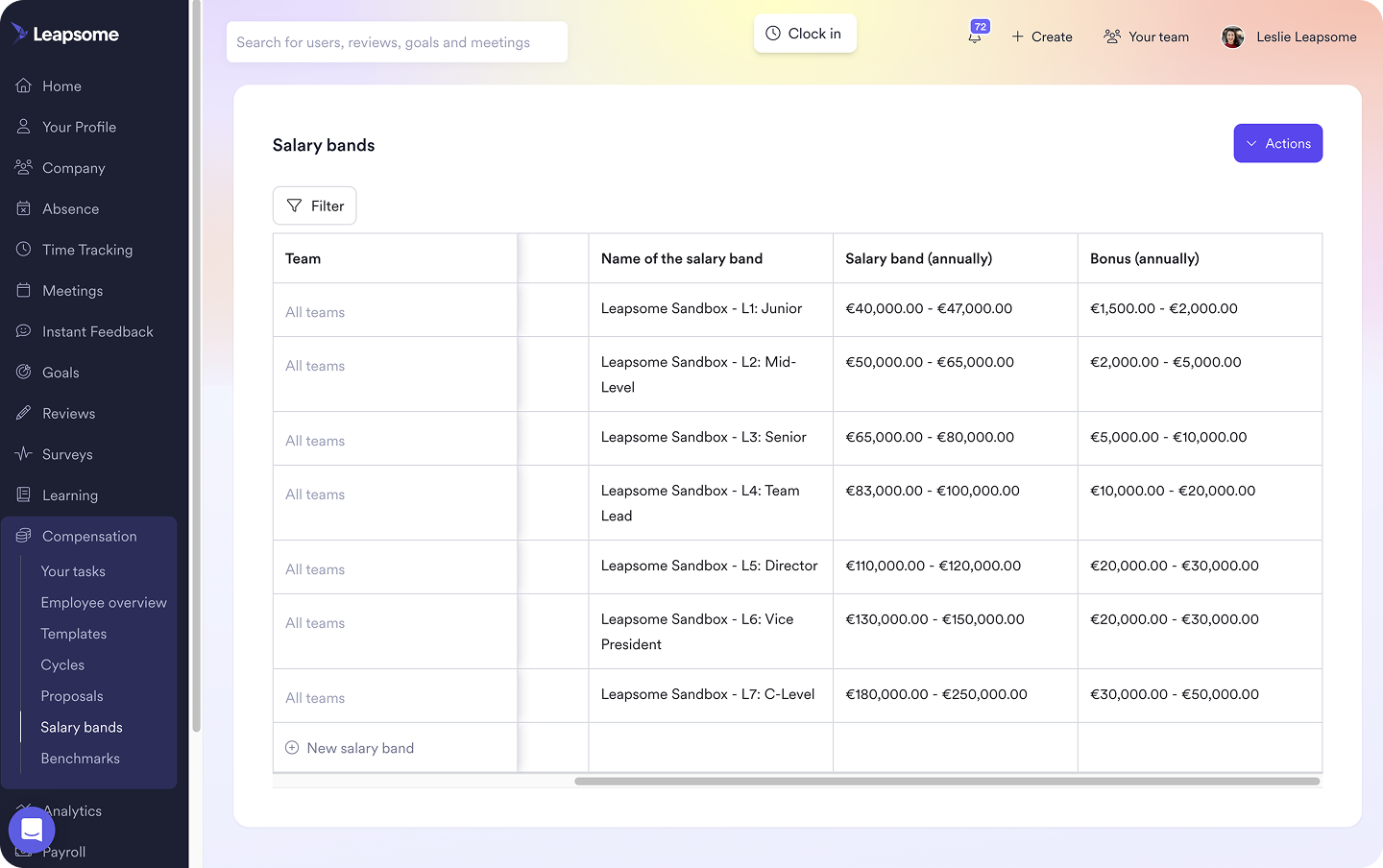
💰 Jede Vergütungsentscheidung mit datengestütztem Kontext absichern
Leapsome bietet HR-Teams ein vernetztes Toolkit, das Performance-, Engagement-, Rollen- und Lerndaten verknüpft, damit Vergütungsentscheidungen compliant und faktenbasiert bleiben.
👉 Entdeckt Compensation Management
Wie ihr Gehaltskompression zuvorkommt
Viele Unternehmen reagieren auf Gehaltskompression erst, wenn sie sich in sinkender Teammoral oder steigender Fluktuation bei Top-Talenten zeigt. Ein wirksamerer Ansatz hält Vergütungs-, Performance- und Karrieredaten dauerhaft im Einklang, um Gehaltskompression von vornherein zu vermeiden. So geht ihr dabei vor.
Gebt Mitarbeitenden eine Entwicklungs-Roadmap
„Wir haben unsere Jobstufen so segmentiert, dass Führungskräfte und Mitarbeitende genau sehen, welche Fähigkeiten für den nächsten Schritt nötig sind. Bei Wachstum geht es nicht nur um einen neuen Titel oder mehr Geld: Es geht darum, neue Kompetenzen zu meistern, die euch für das Unternehmen wertvoller machen.“
Janelle Daugherty, Head of People and Culture at Notion Health
Gehaltskompression tritt eher auf, wenn Mitarbeitende kaum erkennen können, wie ihre Weiterentwicklung aussieht und welche Vorteile damit verbunden sind. Das passiert häufig, wenn Beförderungen und Gehaltserhöhungen keinem klar definierten Rahmen folgen. Klar festgelegte Karrierepfade und Erwartungen an die Kompetenzentwicklung verankern Vergütungsentscheidungen und geben Mitarbeitenden ein greifbares Ziel.
Belohnt Beiträge, nicht den Zeitpunkt der Einstellung
Ihr könnt Marktgehälter nicht ignorieren, solltet sie aber auch nicht als einzige Grundlage für Vergütungsentscheidungen heranziehen. Wenn ihr Wachstum und mehr Verantwortung neben diesen externen Benchmarks berücksichtigt, entstehen fairere und besser begründbare Entscheidungen. Das zeigt außerdem, dass euer Unternehmen Menschen für ihre Beiträge belohnt und nicht nur dafür, wann sie eingestiegen sind.
Behaltet die Daten im Blick, um Warnsignale zu erkennen
Erst dann in die Daten einzutauchen, wenn Gehaltskompression bereits eingetreten ist, ist reine Schadensbegrenzung. Der klügere Ansatz ist, Vergütungsdaten regelmäßig zusammen mit Performance-, Betriebszugehörigkeits- und Beförderungsdaten zu analysieren. So werden Lücken als Datenpunkte sichtbar, auf die ihr reagieren könnt, statt als Kündigungsschreiben.
Der einfachste Weg dorthin ist die richtige Software. Leapsomes All-in-One-HRIS- und Talent-Management-Plattform bringt den gesamten Employee Lifecycle an einem Ort zusammen, damit eure People-Daten eure operativen Prozesse mitgestalten können und umgekehrt.
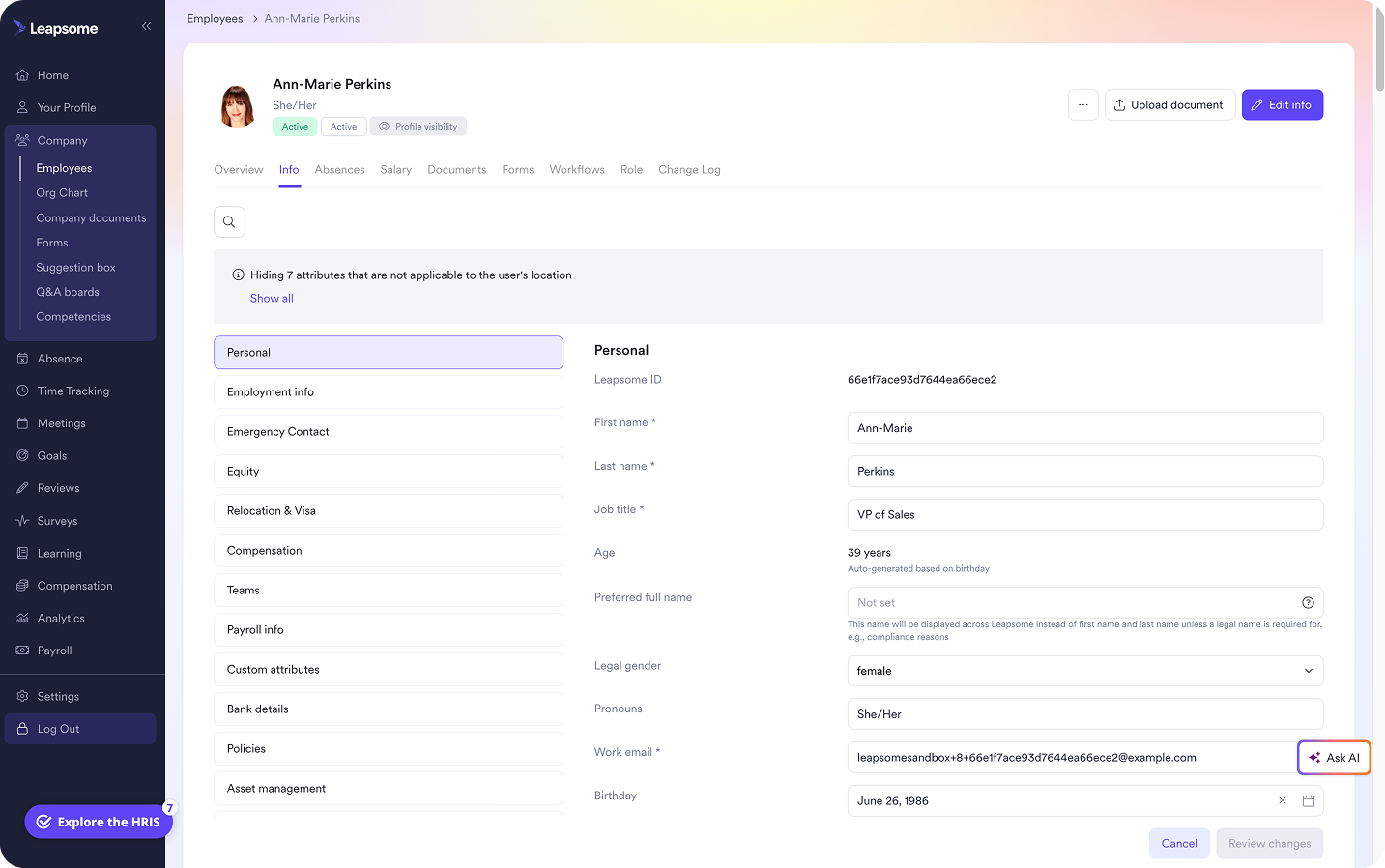
⛓️ Alle Mitarbeiterdaten auf Abruf
Leapsome zentralisiert jede eurer Mitarbeiterinformationen, von Rollen bis Vergütung, damit ihr bei Vergütungsentscheidungen nicht erst Zahlen zusammensuchen müsst.
👉 Entdeckt Mitarbeiterprofile
Von Vergütungsentscheidungen zur Vergütungsstrategie mit Leapsome
Die meisten HR-Verantwortlichen kennen die Risiken der Gehaltskompression. Die eigentliche Herausforderung ist, sie zu verhindern, besonders wenn Vergütungs- und Mitarbeiterdaten getrennt von ihrem Entscheidungskontext in Silos liegen.
Fehlt HR-Verantwortlichen ein vernetzter Blick auf diese ineinandergreifenden Faktoren, kommt Gehaltskompression meist erst ans Licht, wenn langjährige Mitarbeitende Fragen stellen oder kündigen, während Führungskräfte Schwierigkeiten haben, die Unterschiede zu erklären.
Leapsome schafft die umfassende Transparenz, die HR-Verantwortliche brauchen, um die Wissens- und Gehaltslücke zu schließen. Performance-Management und Kompetenzentwicklung arbeiten mit robuster People Analytics zusammen und geben HR-Teams eine aussagekräftige Möglichkeit zu messen, wie Mitarbeitende wachsen und wie sich dieses Wachstum in ihrem Gehalt widerspiegelt. Mit Tools wie Kompetenzmodell für klare Entwicklungspfade und Mitarbeiterprofile, die das Gehalt aller stets im Blick behalten, macht Leapsome es einfacher, Vergütungsentscheidungen so anzupassen, dass Gehaltskompression vermieden wird und die gesamte Bandbreite der Mitarbeiterbeiträge sich widerspiegelt.
„Alle Payroll-Daten liegen in Leapsome: Es ist eine lebendige Zahl. Ändern sich Gehälter, aktualisieren Führungskräfte sie direkt.“ Siddharth Dhanuka, Head of Finance and Operations at SQUAKE
🔍 Verbindet die Punkte zwischen euren People-Systemen
Leapsome vereint Vergütungs-, Performance- und Entwicklungsdaten, damit HR-Verantwortliche Risiken für Gehaltskompression erkennen, bevor die Moral sinkt und Stimmung sowie Engagement der Mitarbeitenden darunter leiden.
👉 Demo buchen
FAQ
Was ist ein Beispiel für eine Klage im Zusammenhang mit Gehaltskompression?
Gehaltskompression ist nicht illegal, kann aber Diskriminierung am Arbeitsplatz aufdecken, selbst wenn sie unbeabsichtigt ist. 2020 verklagte beispielsweise eine Business-Intelligence-Entwicklerin erfolgreich ihren Arbeitgeber, weil ein neu eingestellter männlicher Kollege trotz ihrer größeren Erfahrung ein höheres Gehalt erhielt. Das Ergebnis: eine Entschädigung von mehr als $100K für die Mitarbeiterin.
Was ist eine Gehaltskompressionsanalyse?
Ihr könnt Gehaltskompression in drei Schritten analysieren:
- Erfasst die aktuellen Gehaltsspannen und Jobstufen.
- Berechnet die Kompressionsrate, indem ihr die durchschnittlichen Gehälter neuer Mitarbeitender durch die durchschnittlichen Gehälter langjähriger Mitarbeitender teilt.
- Vergleicht die Werte mit dem Arbeitsmarkt, um die Ursache der Kompression zu identifizieren, falls vorhanden.
Verdienen neue Mitarbeitende im Schnitt $45K pro Jahr, während langjährige Mitarbeitende mit größerem Kompetenzumfang und nachweislichem Erfolg $50K verdienen, ergibt sich eine Kompressionsrate von 0,9. Dieser Wert liegt nahe an der Parität und signalisiert, dass sich ein zweiter Blick auf eure Vergütungspraxis lohnen könnte, je nach Marktlage.



.jpg)

.jpg)
.png)