10 best Namely alternatives for 2026
.png)
.jpg)
Namely works well for some teams, but others find that performance, engagement, and core HR data remain spread across multiple systems. That lack of connection often leads organizations to take a closer look at alternative HRIS platforms.
The best Namely alternatives connect employee records, payroll preparation, and people enablement without treating HR like a back-office function. In this guide, we’ll compare the best Namely replacements for 2026, focusing on flexibility, scalability, and what actually matters when you're modernizing HR infrastructure.
🏠 Bring all HR processes under one roof
Leapsome brings core HR, performance, engagement, and learning together — so you can spend less time managing tools and more time supporting your team.
👉 Explore Leapsome HRIS
The best Namely alternatives for 2026
This shortlist focuses on HR platforms that can realistically replace Namely as a system of record. Each tool was evaluated based on core HRIS capabilities, payroll and benefits administration, automation, configurability, and its support for growing organizations with evolving people operations.
Disclaimer: All information in this article is accurate as of January 2026 and based on details available on each vendor’s official website. HR software evolves quickly, so features and capabilities may change. Always confirm the latest information directly with the vendor.
{{TABLE}}
Leapsome
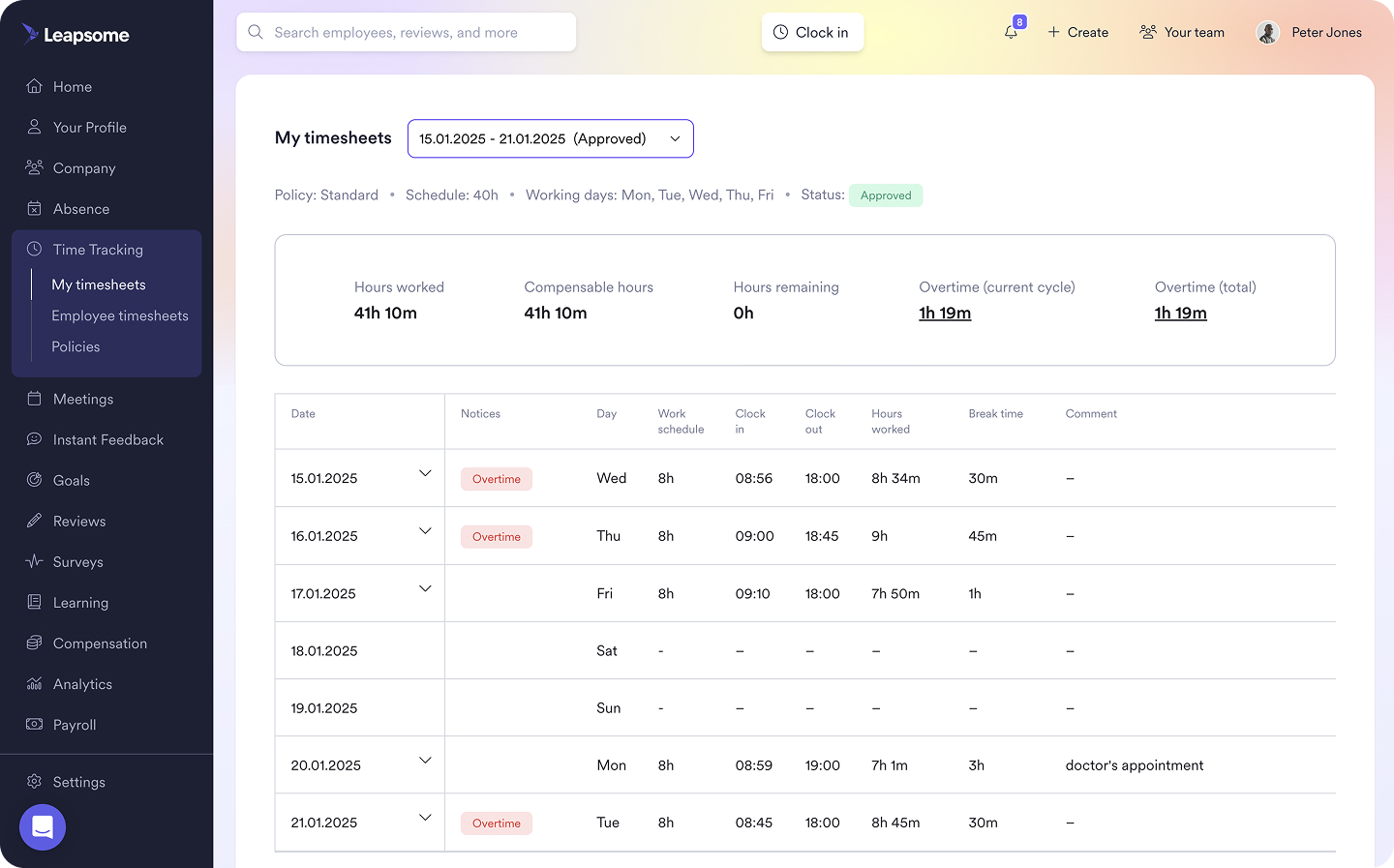
Leapsome is a people-first HRIS designed for teams that want a consistent, shared view of all HR data and processes, instead of a patchwork of tools. It brings core HR data under one roof with performance, engagement, learning, and payroll preparation processes. That means HR teams can handle day-to-day operations and invest time in enabling managers, developing talent, and improving the employee experience.
Because everything lives in the Leapsome platform, HR teams spend less time maintaining systems and more time working with managers and employees. Leapsome is built to stay flexible as organizations grow, without forcing them into rigid workflows or enterprise-level complexity.
“Many HR teams still struggle with the basics — too many disconnected tools, limited insights. That’s why we built a truly people-first HRIS that unifies all employee data into one source of truth.”
— Suraj Paneru, Customer Success Coach at Leapsome
Key features
- Core HR features that adapt alongside centralized employee records and profiles
- Automated onboarding and offboarding workflows
- Payroll preparation features that streamline all data collection (employee data, time tracking, etc.)
- Absence and time-off management with calendar syncing
- Integrated employee surveys connected to HR data
- Performance reviews, goals, and feedback systems
- Compensation planning linked to performance and role data
- HR analytics tied to all system and employee data
- Employee self-service portals that enable quick editing and access
Pros
- Everything — including employee data, performance reviews, engagement, and learning — lives in one place
- Easy to customize without needing developers or IT support
- Saves managers time with automatic reminders and simple workflows
- Employees actually use it because the interface is clean and works
- Fast to set up and roll out compared to enterprise HRIS platforms
- AI features support review writing, highlight patterns in feedback, and help surface insights (while keeping humans firmly in the decision loop)
- Strong customer support with dedicated onboarding and ongoing help
Limitations
- Payroll preparation and payroll-related features vary by region and are designed to integrate with existing payroll systems
- New features are added consistently, which may create a learning curve
Best for
Companies of all sizes seeking a unified platform to connect core HR processes, such as payroll preparation and time tracking, with important people enablement features, including performance, engagement, and learning.
🚀 See how Leapsome replaces your fragmented HR tools
Explore our all-in-one HRIS and discover how it streamlines payroll preparation, performance reviews, and employee engagement in one system.
👉 Book a personalized demo
Rippling
.webp)
Rippling combines core HR, IT, and finance in a single system, making it appealing for teams that prioritize operational control and automation across departments.
The platform centers on automation across employee lifecycle events, with workflows that trigger actions across payroll, benefits, and third-party systems. As such, organizations with a strong focus on operational efficiency — particularly where IT and access management are concerned — may want to consider Rippling.
Key features
- Core HR with centralized employee records
- Payroll and tax management
- Benefits administration
- Time tracking and attendance
- Automated onboarding and offboarding workflows
- App and device management tied to employee data
Pros
- Broad platform that connects HR, payroll, and IT tasks
- Strong automation for joiner, mover, and leaver workflows
- Centralized control over employee access and tools
- Flexible integrations with third-party applications
- Suitable for companies with complex operational needs
Limitations
- Ongoing configuration may feel complex, especially for teams primarily seeking performance or engagement workflows
- Interface may feel dense for smaller HR teams
- Teams may need to pay for modules they don’t need
Best for
Organizations that want to manage HR, payroll, and IT processes together and are evaluating Namely competitors with a strong emphasis on automation and operational control.
BambooHR
.png)
BambooHR is a core HR platform commonly used by small and mid-sized teams that want a straightforward system for managing employee information. If ease of use and quick setup matter more than deep customization or interconnected people enablement, BambooHR can be a compelling alternative to Namely. The platform focuses on centralizing employee records and supporting everyday HR tasks, with optional add-ons for payroll and benefits.
Key features
- Centralized employee records and document storage
- Onboarding and offboarding workflows
- Time-off tracking and approvals
- Basic reporting and HR analytics
- Performance review tools
- Optional payroll and benefits administration
Pros
- Simple interface that is easy for employees to navigate
- Quick implementation compared to more complex HRIS platforms
- Clear structure for managing employee data
- Helpful onboarding resources for HR teams
- Works well for teams with straightforward HR needs
Limitations
- Limited flexibility for custom workflows
- Reporting options may feel basic for advanced use cases
- Less suitable for organizations with complex or global requirements
Best for
Smaller teams that want a clean, easy-to-adopt HRIS and don’t yet need tightly connected performance, learning, or engagement processes.
Personio
.webp)
Personio is an HRIS designed primarily for European organizations that need strong local compliance and standardized payroll workflows, sometimes at the expense of flexibility.
The platform brings together core HR, payroll, and people operations into a single system, with an emphasis on standardization across regions. Personio is typically valued by companies that prioritize regional compliance and consistency over deep customization.
Key features
- Centralized employee records and document management
- Payroll and payroll preparation for supported countries
- Absence and time-off management
- Onboarding and offboarding workflows
- Basic performance and feedback features
- Compliance-focused reporting and documentation
Pros
- Strong coverage for European payroll and compliance needs
- Clear workflows for managing employee lifecycle events
- Consolidates HR and payroll in one platform for supported regions
- Suitable for multi-country operations within Europe
- Structured setup that supports consistency across teams
Limitations
- Limited payroll and benefits coverage outside Europe
- Customization is more limited than in people-enablement-first platforms, which can make it harder to adapt workflows as teams and cultures evolve
- Reporting depth may not meet advanced analytics needs
Best for
Europe-based or Europe-first organizations looking for an HRIS with built-in support for local payroll and compliance requirements.
ADP Workforce Now
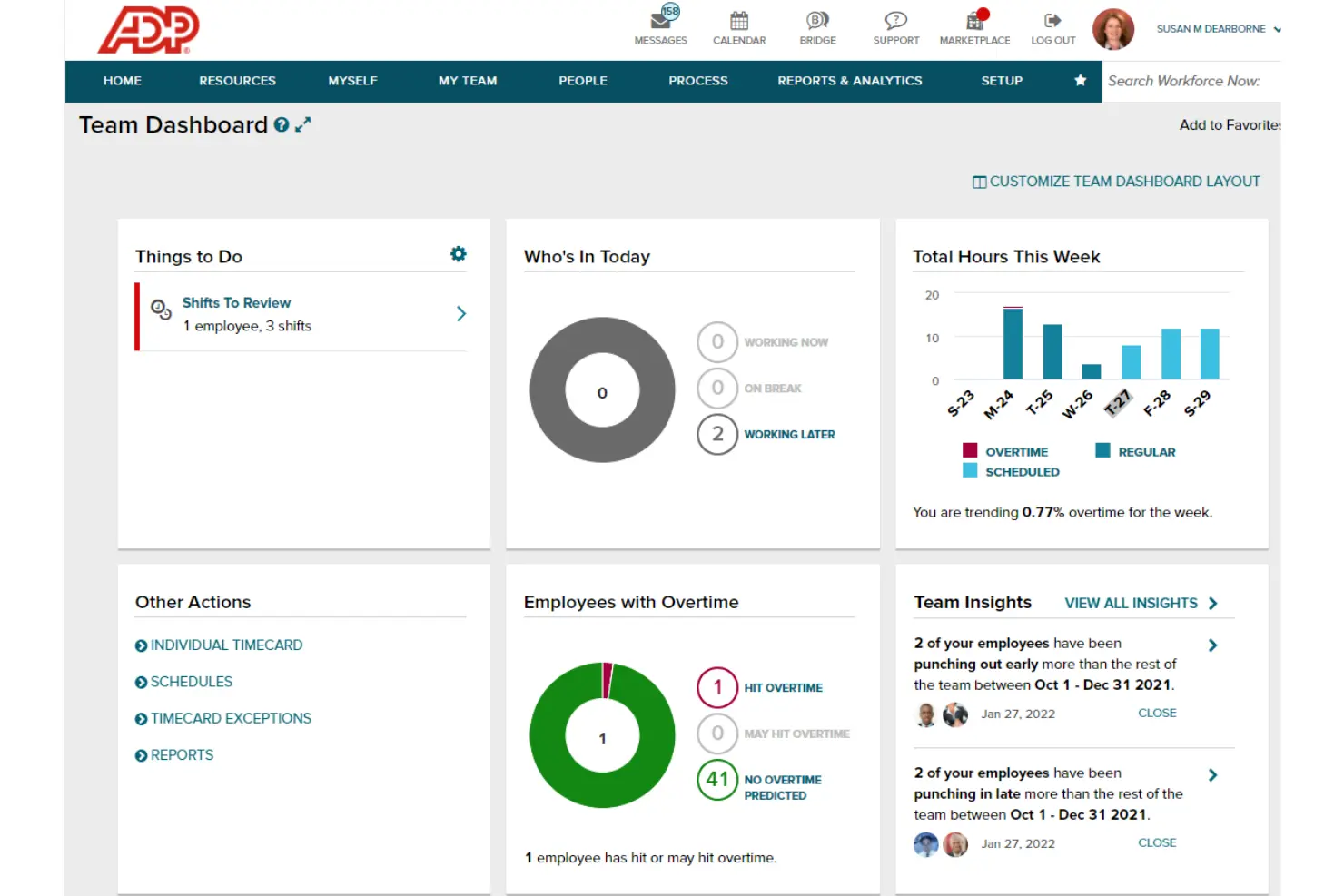
ADP Workforce Now is an HCM platform commonly used by mid-sized and larger organizations that need robust payroll and compliance capabilities. If your team deals with complex payroll requirements or regulated operating environments, it makes for a solid Namely alternative.
The platform combines payroll, benefits, and core HR in a single system, with an emphasis on reliability and regulatory support. If scale, risk management, and regulatory coverage matter more than flexibility or employee experience, ADP Workforce Now may be a fit.
Key features
- Payroll and tax management across multiple jurisdictions
- Benefits administration and open enrollment support
- Core HR and employee record management
- Time and attendance tracking
- Compliance reporting and audit support
- Workforce analytics and standard reporting
Pros
- Strong payroll and tax capabilities
- Broad compliance coverage
- Suitable for organizations with complex payroll needs
- Scales well for larger or regulated teams
- Long track record in the HR software market
Limitations
- Configuration options can feel rigid
- Implementation may take longer than lighter HRIS tools
- The user experience can feel dated, particularly for employees and managers who expect intuitive, self-service tools
Best for
Enterprises and some mid-sized organizations that need dependable payroll and compliance support.
Paycor
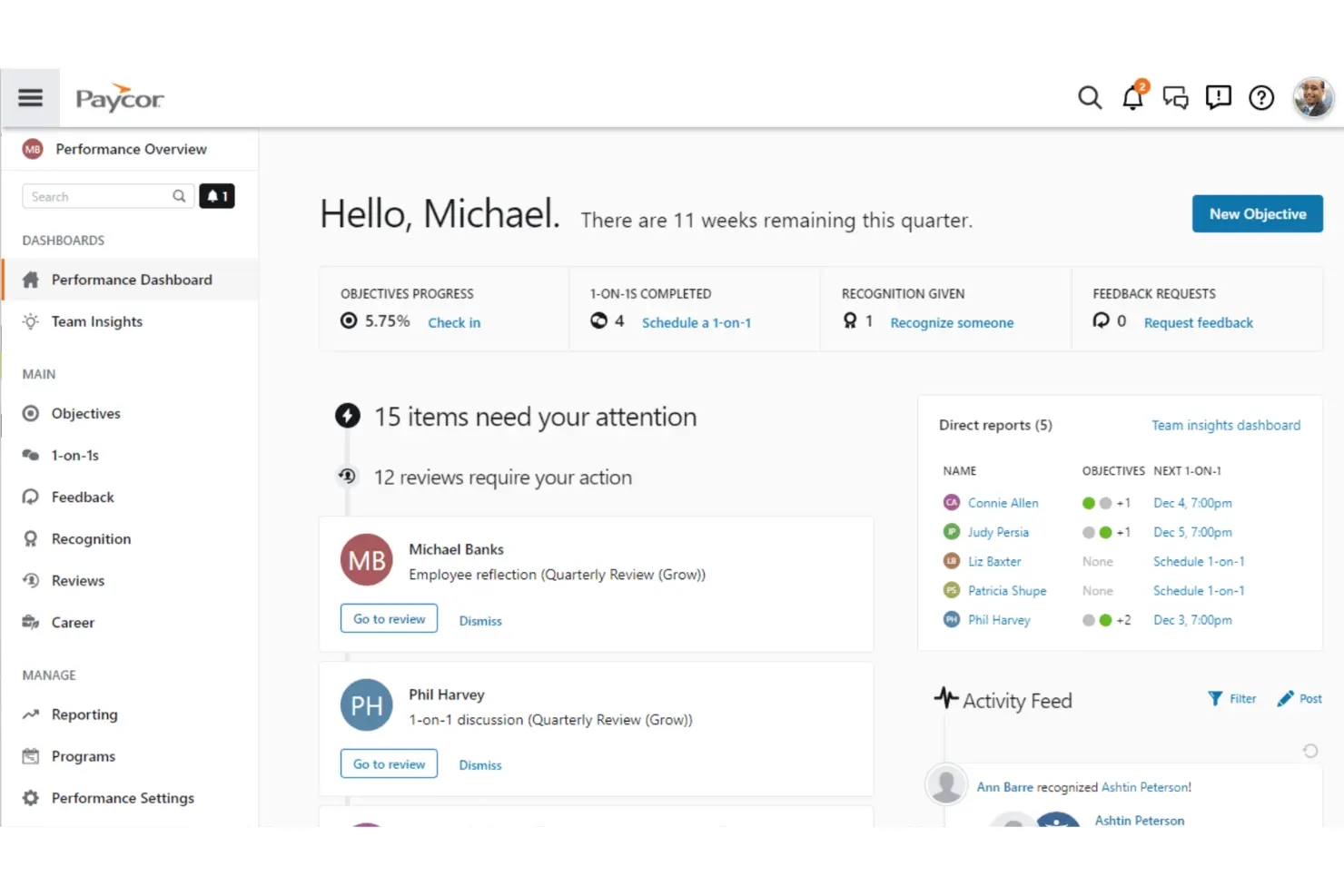
Paycor is an HR and payroll platform built for small and mid-sized businesses that want an integrated system for managing people operations. It’s a good option for organizations where payroll is the primary driver, rather than performance, engagement, or learning enablement.
Key features
- Payroll and tax management
- Core HR and employee records
- Benefits administration
- Time and attendance tracking
- Onboarding workflows
- Standard HR reporting and analytics
Pros
- Payroll and HR managed in one system
- Designed for small and mid-sized businesses
- Clear workflows for routine HR tasks
- Payroll compliance support
- Accessible reporting for HR teams
Limitations
- Limited customization for complex HR processes
- Reporting may not meet advanced analytics needs
- Less flexibility for organizations with unique workflows
Best for
Smaller or mid-sized teams looking for an all-in-one HR platform, with an emphasis on payroll processing.
Paylocity
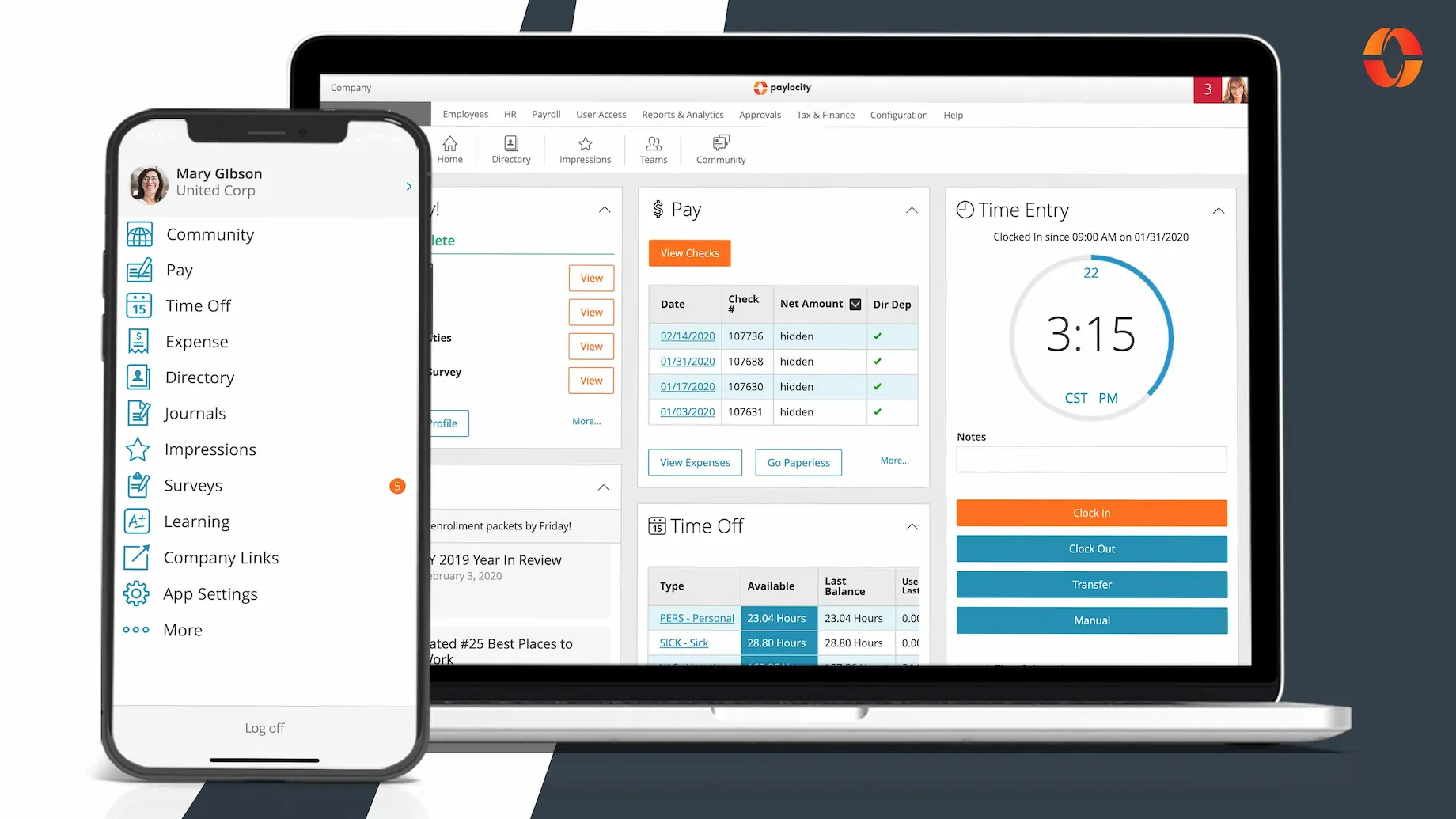
Paylocity is often shortlisted by teams that want payroll and HR data tightly integrated, with employee self-service at the center. For organizations moving off Namely, it is typically evaluated when improving day-to-day usability for employees and managers is a priority.
Rather than positioning itself as a highly configurable HRIS, Paylocity emphasizes standardized, payroll-centric workflows with employee self-service at the core. This makes it a common option for teams that want predictable processes and built-in guidance.
Key features
- Payroll and tax processing
- Core HR and employee record management
- Employee self-service for pay, benefits, and time-off
- Time and attendance tracking
- Benefits administration
- Standard workforce reporting
Pros
- Strong employee self-service experience may improve adoption
- Payroll and HR data are closely connected
- Clear workflows for common HR processes
- Useful tools for workforce management
- Designed with mid-sized teams in mind
Limitations
- Limited flexibility for highly customized workflows
- Reporting options can feel constrained for advanced analysis
- Interface may feel busy for smaller HR teams
Best for
Mid-sized organizations that want a payroll-centric HR platform with strong employee self-service capabilities.
Workday
.webp)
Workday is usually considered when teams have outgrown mid-market HR platforms and are planning for long-term scale. It is most relevant for organizations with complex structures, multiple business units, or global operations. The platform is designed to support large enterprises, with broad coverage across HR, finance, and workforce planning.
Because of its scope, Workday is usually evaluated as part of a broader transformation rather than a straightforward HRIS replacement.
Key features
- Core HCM with centralized employee data
- Global payroll and workforce management
- Benefits administration
- Time and attendance tracking
- Workforce planning and analytics
- Compliance and audit support
Pros
- Built to support large and complex organizations
- Strong global capabilities
- Deep reporting and analytics
- Integrates HR and financial data
- Suitable for long-term enterprise scale
Limitations
- Implementation can be lengthy and resource-intensive
- Requires significant internal ownership and change management
- May feel overly complex for mid-sized teams
Best for
Large organizations with complex global needs and the internal resources to manage long implementations and change programs.
Gusto
.webp)
Gusto is often best suited for by smaller teams that want to get payroll running quickly and aren’t yet focused on structured people enablement. It tends to come up early in the decision process, especially for companies that are replacing their first HR system or formalizing processes for the first time. The platform centers on payroll, with core HR features layered on to support basic employee management.
Key features
- Payroll and tax filing
- Benefits administration
- Core HR and employee records
- Time-off tracking
- Employee self-service
- Basic reporting
Pros
- Quick setup and intuitive interface
- Strong payroll experience for small teams
- Clear pricing structure
- Easy for employees to use
- Minimal training required
Limitations
- Limited flexibility for growing or complex organizations
- Reporting and analytics are fairly basic
- As teams grow, limitations around customization, reporting, and connected people data become more apparent
Best for
Small businesses that want a simple, payroll-first platform and do not need advanced HR workflows or customization.
UKG Pro
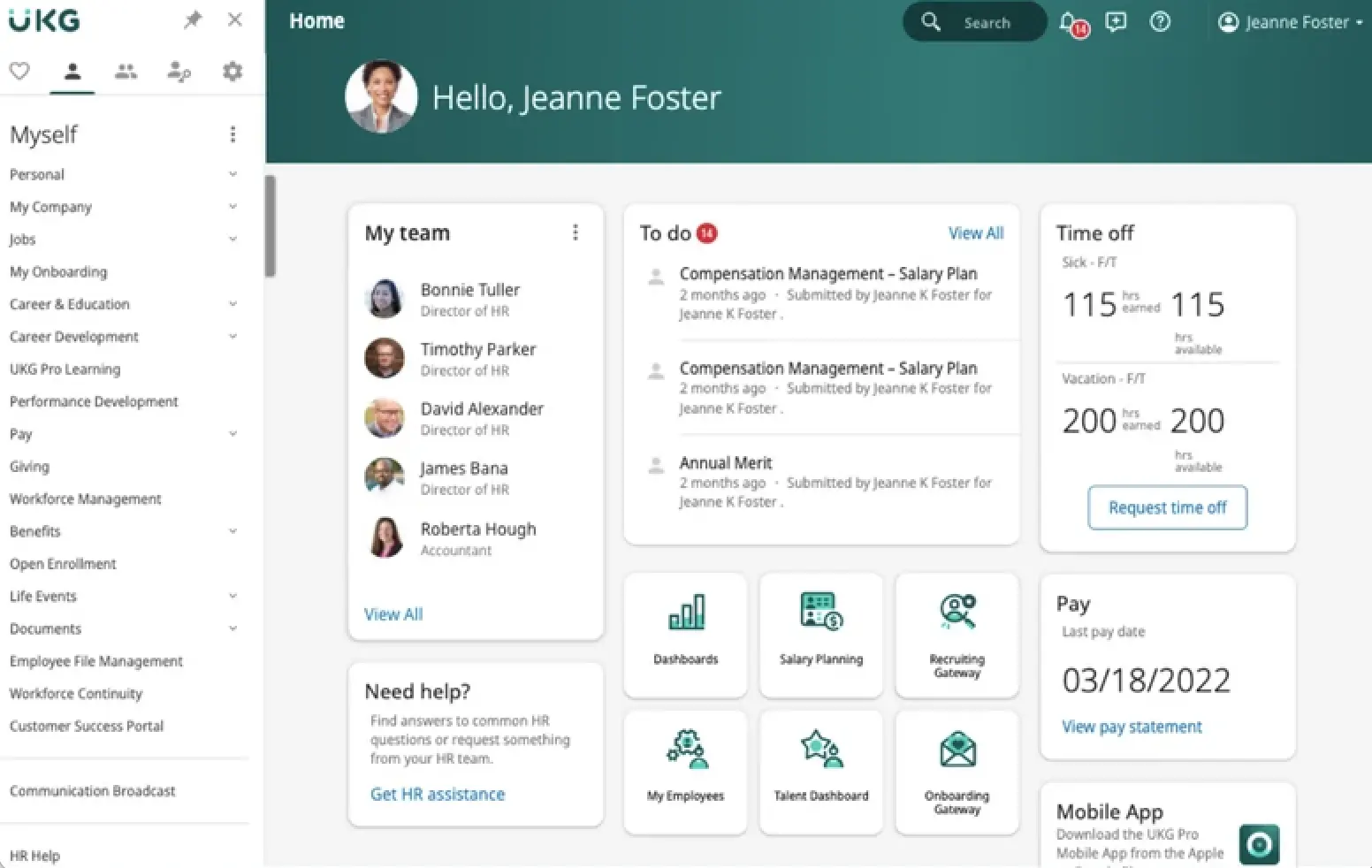
UKG Pro brings together HR, payroll, and workforce management with a strong emphasis on operational reliability over configurability. UKG Pro is generally shortlisted by teams that value consistency and depth in these areas over extensive customization.
Key features
- Core HR and employee record management
- Payroll and tax management
- Time and attendance tracking
- Workforce scheduling and labor management
- Benefits administration
- Standard reporting and compliance tools
Pros
- Strong payroll and workforce management capabilities
- Reliable time and attendance features
- Suitable for organizations with complex labor requirements
- Broad compliance support
- Scales well for larger teams
Limitations
- Interface may feel less modern compared to newer platforms
- Configuration can require specialist support
- Reporting flexibility may feel limited for some teams
Best for
Organizations with complex workforce management needs, such as hourly or shift-based teams, that require dependable payroll and time tracking.
Key considerations when evaluating Namely alternatives
Replacing an HR system is rarely about finding more features. It usually comes down to whether a platform can support how your organization actually operates today and how it expects to grow. This guide focuses on the decisions that matter most once teams move beyond surface-level comparisons.
HRIS vs HCM vs payroll-first platforms
Not all HR software is built to do the same job. Some tools focus on payroll first, with HR features added on. Others position themselves as full HCM platforms designed for large enterprises. An HRIS sits between these approaches, acting as a central system for employee data and everyday people operations.
When evaluating options, it helps to be clear about what you need your system to manage day to day. For example, if employee management is a priority, you’ll want to choose a tool like Paylocity that really focuses on employee empowerment via self-service portals and engagement workflows. If administration and payroll preparation is more important, maybe consider a compliance-focused tool like Paycor.
Some tools on this list do a bit of everything. If that’s really important to you, and you foresee your organization scaling down the line, it’s wise to choose a fully functional HRIS like Leapsome.
When an all-in-one HRIS makes more sense than point solutions
Point solutions can work in the short term, especially when teams grow quickly and adopt tools one problem at a time. But over time, this often leads to fragmented data, duplicated work, and unclear ownership.
An all-in-one HRIS can reduce this complexity by consolidating employee data, documents, and performance context in a single place. This is especially relevant when managing records and compliance through employee file management software, or when performance processes are expected to connect closely with HR data through performance management software.
Choosing the right Namely alternative for your team in 2026
The right Namely replacement depends on where your organization is headed, not just where it is today. Consider three key factors:
- Payroll complexity — If you operate across multiple states or countries, prioritize platforms with strong native payroll (ADP Workforce Now, Personio for Europe) or robust integration capabilities. If payroll is straightforward, focus on where else you need depth, such as performance management or employee engagement.
- Growth trajectory — Fast-scaling teams often outgrow rigid systems within 18-24 months. Look for platforms that can evolve with you without requiring a complete reimplementation.
- Integration vs. consolidation — Point solutions work when you have specialized needs and strong technical resources to maintain integrations. All-in-one platforms reduce overhead but require finding one vendor that meets 80-90% of your requirements. Most mid-sized teams find that consolidating core HR, performance, and engagement under one roof with an HRIS like Leapsome reduces long-term friction, even if it means compromising on niche features.
The teams that succeed with HRIS migrations involve managers and employees early. Run a pilot with 20-30 users, gather honest feedback, and adjust your rollout plan accordingly. And remember: The best platform is the one your team will actually use.
💪 Replace Namely with a platform built for growth
Leapsome adapts to your needs without the complexity of an enterprise. Book a personalized demo to see how it fits your organization.
👉 Book a demo
Frequently asked questions about Namely alternatives
What is the best Namely alternative for mid-sized companies?
It depends on your priorities. If you need deep payroll capabilities and compliance support, ADP Workforce Now or Paycor are solid choices. For organizations focused on employee development and engagement alongside core HR, Leapsome offers the most comprehensive solution, connecting HRIS, performance, learning, and compensation in one platform.
Mid-market teams (100-1,000 employees) often need flexibility without enterprise-level complexity. A people-first HRIS is perfect for this stage. They’re customizable enough to adapt as you grow, but simple enough to implement quickly.
Which Namely alternatives integrate with existing payroll providers?
Several Namely alternatives offer strong payroll integrations if you want to keep your current provider while upgrading your HRIS capabilities. For instance, Leapsome integrates with major payroll systems and focuses on payroll preparation, collecting and organizing employee data so it's ready to export to your provider.
How much does it cost to switch from Namely to a new HRIS?
The total cost of switching from Namely includes several factors beyond the new platform's pricing. Platform costs vary widely. Entry-level platforms like Gusto start around a few dollars per user per month, while mid-market platforms typically range from US$8-$20 per user per month, depending on modules and features.
You'll also need to budget for implementation (which can take anywhere from a few weeks to several months), data migration, and training time. Most organizations see temporary productivity dips during the 2-4 week transition period, but switching costs are often offset by efficiency gains and better insights within the first year.
Can I migrate my Namely data to a new platform?
Yes, most Namely alternatives support data migration, though what transfers smoothly varies by platform. Employee records (names, contact information, job titles, departments), organizational structures, and basic documents typically migrate well. Historical performance data, archived reviews, and custom workflows can be more complex and may require additional effort or manual cleanup.
Most vendors provide migration support as part of implementation, and some offer dedicated migration specialists for larger or more complex datasets. The key is planning ahead. Clean up your data in Namely before migration, prioritize what's essential to transfer, and work closely with your new vendor's support team to ensure a smooth transition.
Emily Laytham

.jpg)
.jpg)
%20(1).webp)


.jpg)